The summer harvest has just been jarred — limited quantity →

The garden

The flower library.

Sylvia plants, the bees choose. These are the flowers behind the taste of our harvests: what each one gives the bees, and what gardeners say about it.

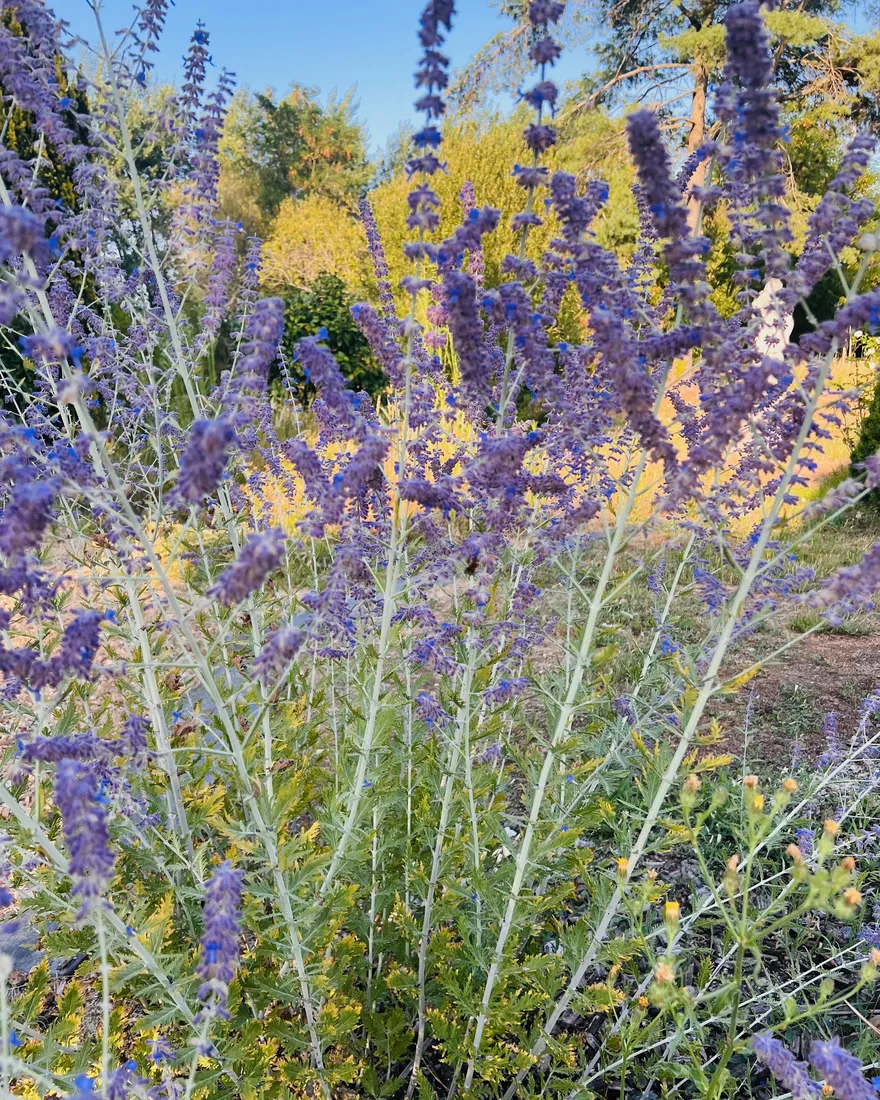
Lavender-blue Russian sage spikes on silvery stems in evening light

Russian sage

Perovskia atriplicifolia

July to September

For the bees

When the meadow scorches in high summer, its lavender-blue spikes stay full of nectar. One of the busiest beds in the garden, morning to evening.

The tradition

A close cousin of the sages, with silvery, camphor-scented foliage. Crush a leaf and the scent stays on your fingers — slugs and deer keep away; the bees don’t.
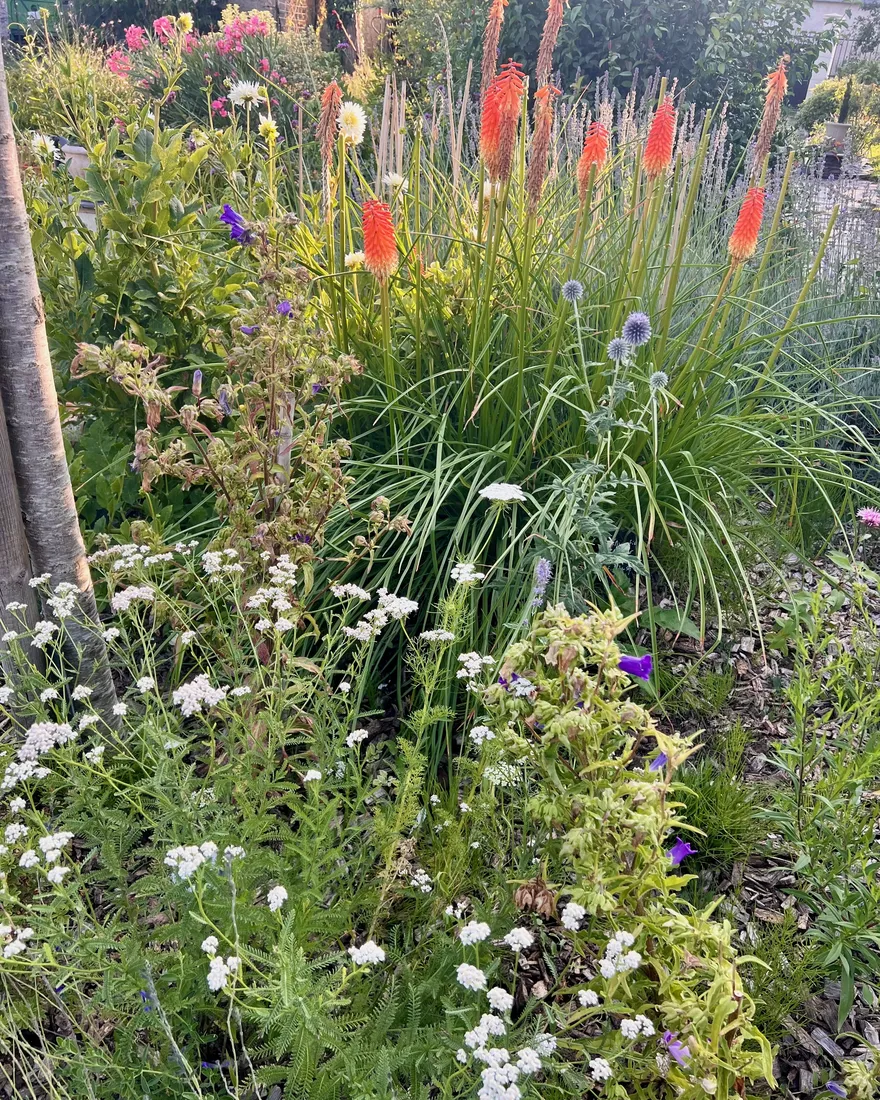
Orange red-hot-poker spikes above grasses, with echinops and white yarrow in the foreground

Red hot poker

Kniphofia uvaria

June to September

For the bees

Each orange spike is a row of tubular flowers full of nectar. Behind it, the blue globes of the echinops and the white yarrow round out the summer buffet.

The tradition

The yarrow in the foreground is a herbalist’s classic, traditionally taken as an infusion. The poker itself is there for the nectar — and the show.

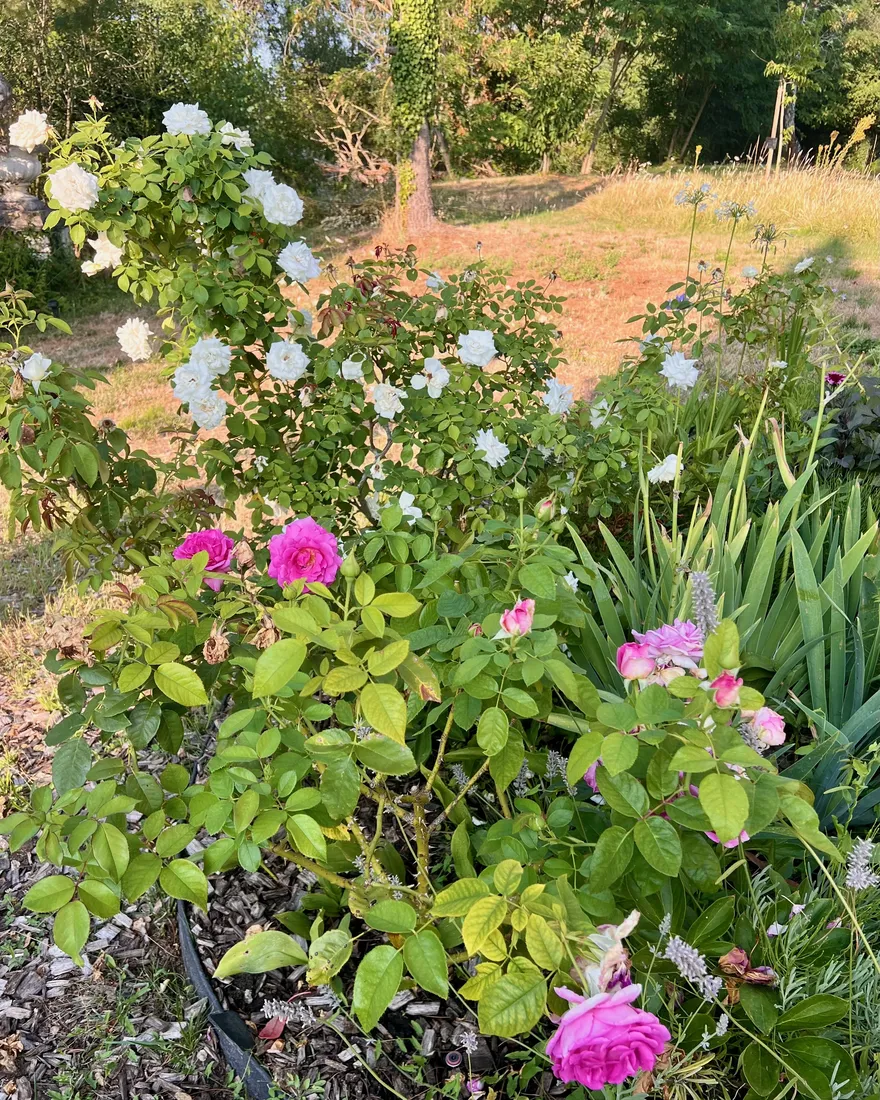
White and deep-pink roses in bloom in front of the meadow, irises behind

Rose

Rosa

May to the frosts

For the bees

Single and semi-double roses keep their heart open: bees gather plenty of pollen there, especially in the morning, before the heat closes the day down.

The tradition

Petals go into rose water or jam; in autumn the hips, naturally rich in vitamin C, make an excellent syrup.

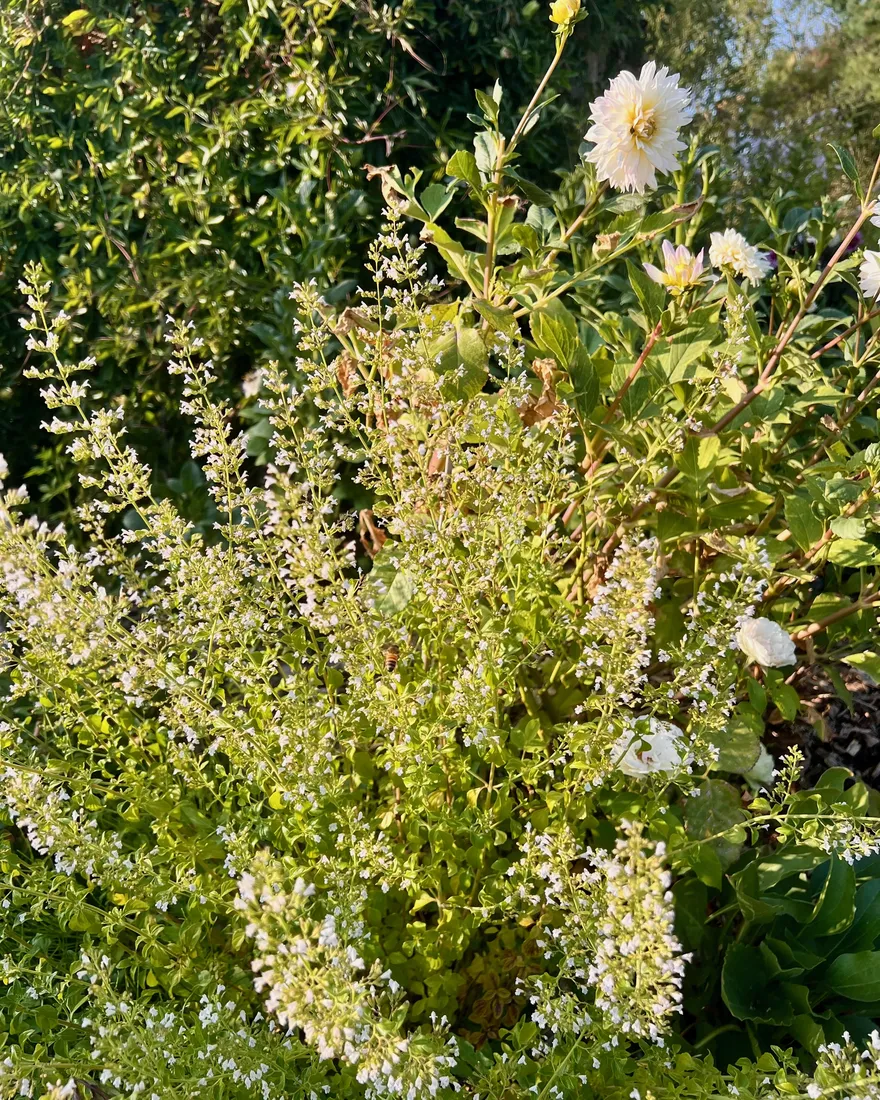
Cloud of tiny white calamint flowers, with a white dahlia behind

Lesser calamint

Calamintha nepeta

July to the frosts

For the bees

A cloud of tiny white flowers that never empties: for three months running, the most foraged plant in the garden.

The tradition

A cousin of mint, traditionally infused after meals in southern France and Italy. You catch its menthol scent just brushing past the bed.

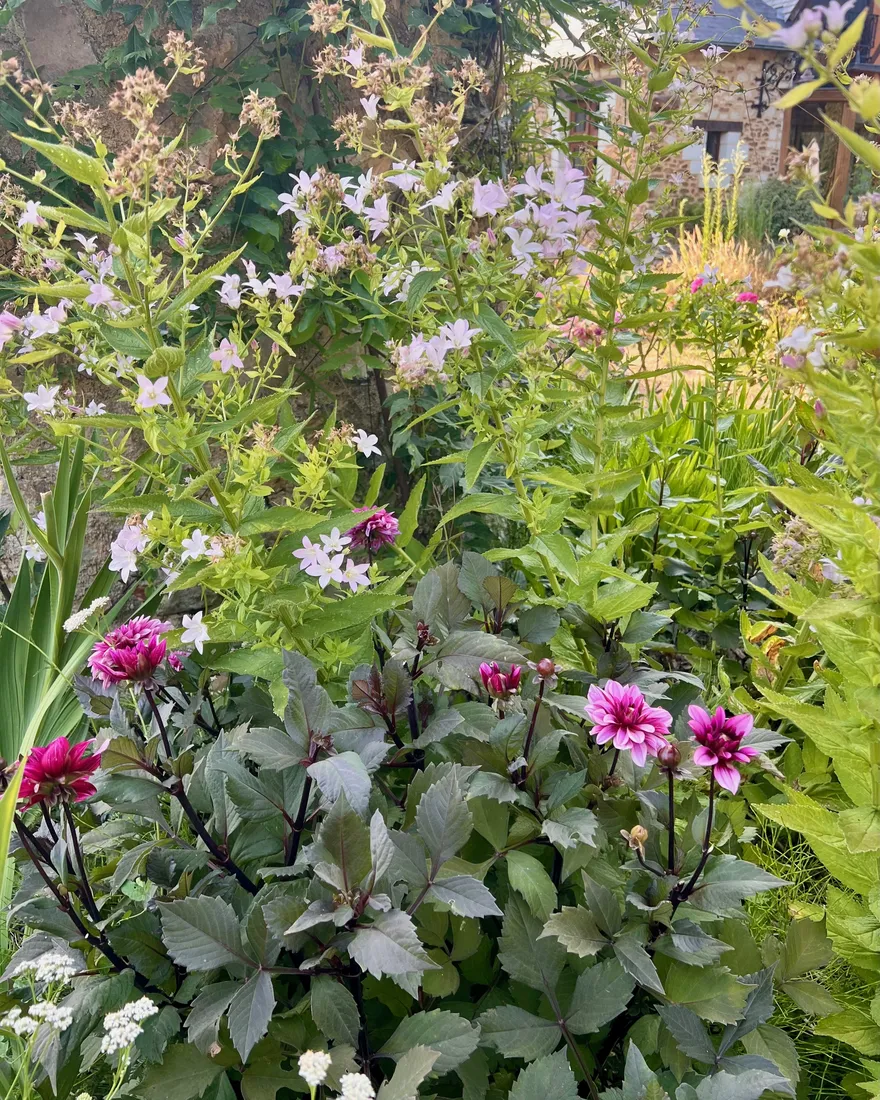
Purple dark-leaved dahlias with pale milky bellflowers above

Dahlia

Dahlia

July to the frosts

For the bees

We pick single and semi-double varieties with a visible heart: their pollen takes over late in the season. Above them, milky bellflowers stretch the table even further.

The tradition

Before it was a cut flower, the dahlia was grown by the Aztecs for its edible tubers.

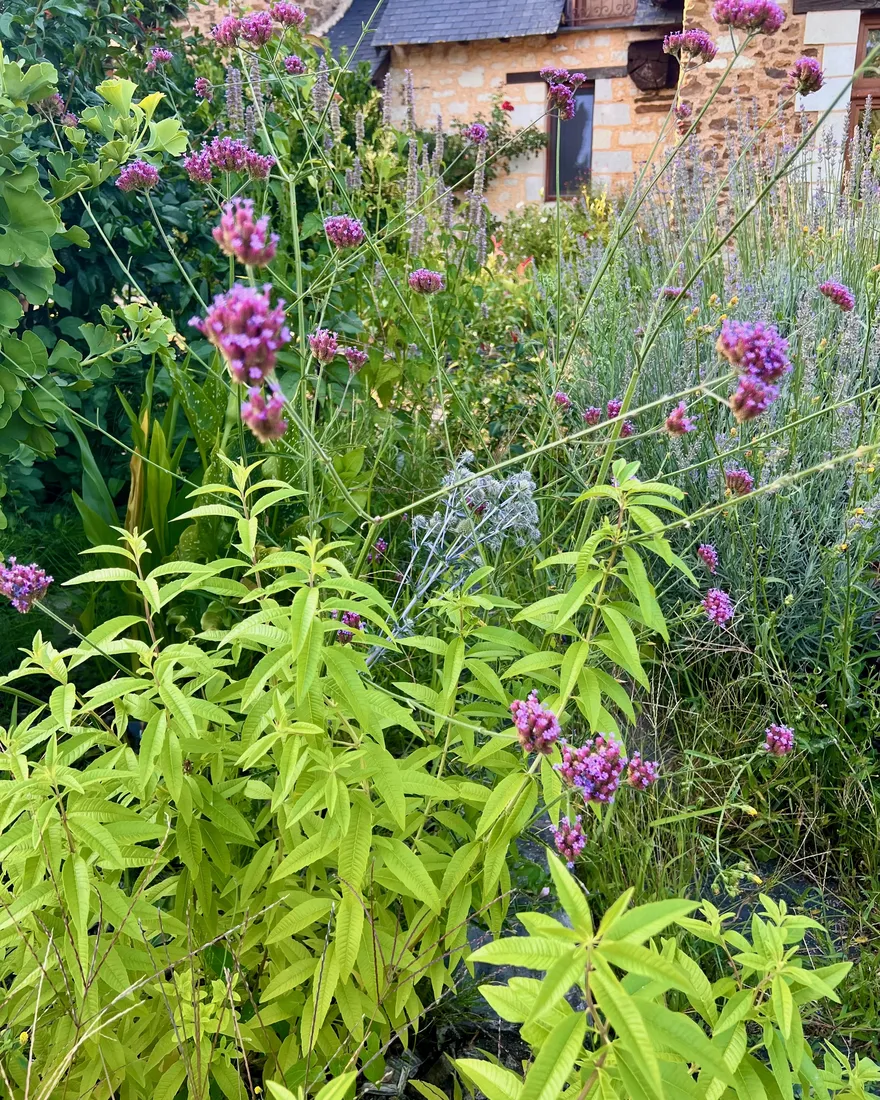
Mauve purpletop vervain clusters in front of the house, lavender behind

Purpletop vervain

Verbena bonariensis

June to the frosts

For the bees

Its mauve clusters, perched at head height, are a nectar bar for bees and butterflies until the first frosts.

The tradition

An ornamental cousin of the herbalist’s vervains; at its feet, lemon verbena scents the evening infusions.

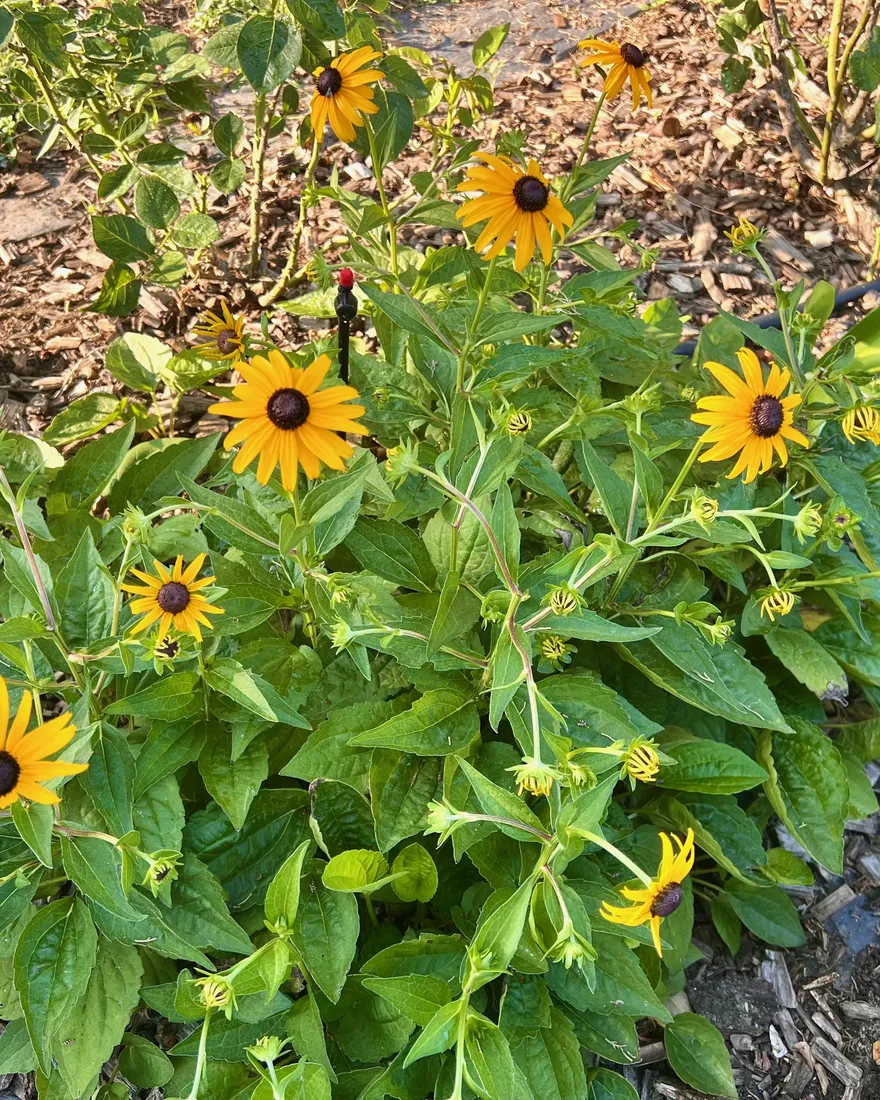
Yellow black-eyed Susans with dark centres over mulch, in late summer

Black-eyed Susan

Rudbeckia fulgida

July to October

For the bees

Its dark centre works as a landing strip: easy, plentiful pollen at the end of summer.

The tradition

Same family as the echinaceas. Its job here is simple: feed the late-season foragers and light up the bed.

The traditional uses mentioned here belong to garden lore, not medical advice: our honey is a food, nothing more.

Discover the garden → See the apiary →

Harvest alert

Don’t miss the next harvest.

The spring harvest was gone in a few weeks. Leave your e-mail: one message when a harvest is jarred, with the quantity available — nothing else, ever.

One e-mail when a harvest is available to order — nothing else, ever. See our privacy policy (in French).